


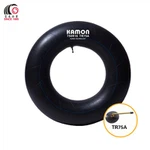
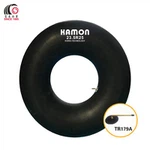
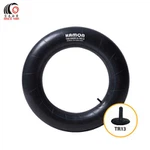
Car Tubes
HANGZHOU FUYANG FUCHUN TYRE CO.,LTD.: Your Professional Car Tubes Supplier!
The factory was founded in 1995 and specializes in the production of various types of engineering vehicle, automobile, motorcycle inner tubes and rubber pads. Since its launch on the market, its products have been exported to more than 100 countries including the Middle East, Africa, America, Europe, and Southeast Asia.
Wide Range of Products
Our main products include truck tubes, car tubes, OTR tubes, bicycle tubes, motorcycle tube, tire flap, snow tubing and repair patch. Our products are exported to more than 100 countries around the world and are favored by domestic and foreign customers.
Professional Team
The company currently has 500 employees, including 8 senior engineers and more than 100 senior professional and technical personnel. It is a large-scale enterprise integrating modern R&D, production, sales and service.
Complete Qualification
The company has passed ISO900A; 2008 certification and has a modern and scientific management system to provide customers with high-quality products and responsible services.
Leading Service
We have many years of industry experience and a complete production management, quality supervision and sales service operation system. If you want to buy our products, just send your needs by email and we can respond to you as soon as possible.
Brief Introduction to Car Tubes
Car tubes are an important part of car tires. They are a kind of ring-shaped elastic rubber products. The main materials include natural rubber and butyl rubber. The car tube can keep the air pressure inside the tire stable, thereby supporting the weight of the vehicle body and ensuring the normal driving of the vehicle. Because the car tube has good elasticity, it can effectively buffer the impact of the road and improve the comfort of driving.


Features of Car Tubes
Enhanced Air Tightness
The main function of the car inner tube is to maintain a stable air pressure inside the tire. Compared with tubeless tires, the inner tube has better air tightness because it is an independent, complete rubber tube that can effectively prevent gas leakage.
Improved Safety
In some occasions where heavy goods need to be pulled or driving on harsh road conditions, such as trucks and agricultural vehicles, the inner tube can provide better support and cushioning, thereby improving driving safety. When the tire is punctured by a sharp object, the inner tube can serve as an additional layer of protection, slowing down the rate of gas leakage and giving the driver more time to react.
Strong Adaptability
The design and manufacture of the inner tube are relatively simple and can adapt to tires of different sizes and specifications. In addition, since the inner tube is an independent component, it can be replaced and maintained more easily, reducing maintenance costs.
Improved Comfort
The softness and elasticity of the inner tube help absorb road shock and vibration, thereby improving driving comfort. This advantage of the inner tube is particularly important for vehicles that need to travel for a long time or travel on uneven roads.
Materials of Car Tubes
Butyl Rubber
Butyl rubber has better high temperature resistance and anti-aging performance than natural rubber, and has a longer service life. At the same time, its air tightness is also very good, so mid-to-high-end inner tubes are basically made of butyl rubber. It is widely used in the manufacture of car tubes, especially in those occasions where air tightness and durability are required.
Natural Rubber
Natural rubber has excellent elasticity, which allows the car tubes made of it to quickly recover when impacted, improving the stability and comfort of driving. Secondly, natural rubber has good wear resistance, which can extend the service life of the inner tubes, reduce the frequency of replacement, and thus save maintenance costs. In addition, natural rubber has strong adaptability to temperature changes, and can maintain stability at high temperatures and maintain softness at low temperatures, ensuring the normal use of the inner tubes under different climatic conditions.

How To Choose Car Tubes?
Tire Specifications
Select inner tube specifications that match the car tire to ensure that the selected inner tube matches the parameters of the tire's rim diameter, section width, etc.
Installation Convenience
Consider whether the inner tube is easy to install and remove, and whether it is compatible with the tire and rim.
Material Selection
The materials of the inner tube are mainly natural rubber and butyl rubber. Butyl rubber inner tubes have better high temperature resistance and delayed aging performance than natural rubber, long service life, and excellent air tightness. Therefore, if conditions permit, butyl rubber inner tubes are preferred.
Performance Evaluation
Consider the wear resistance, puncture resistance, aging resistance and other properties of the inner tube. These properties directly affect the service life and safety of the inner tube.
How To Maintain Car Tubes?
Check The Air Pressure Regularly
Maintaining the stable air pressure of the inner tube is the key to maintaining car tubes. Insufficient or excessive air pressure may cause damage to the inner tube or affect tire performance. Check the air pressure of car tubes regularly to ensure that it is within a reasonable range. Especially during long-distance driving or extreme weather conditions, the air pressure should be checked more frequently.
Clean The Inner Tube
Clean impurities such as moisture, dust and fine sand and gravel in the car tube in time. These impurities may cause corrosion or damage to the inner tube. When disassembling car tubes for repair or replacement, the inside of the inner tube should be carefully inspected and cleaned. You can use a dry cloth or paper towel to gently wipe the surface of the inner tube to ensure that there is no residue.
Proper Storage
Car tubes should be stored in a ventilated, dry, cool and dark environment to slow down their aging process. Avoid exposing the inner tube to direct sunlight, high temperature or humidity. It is best to place car tubes vertically on a rack to avoid folding or twisting. If not used for a long time, make sure the inner tube is properly sealed to prevent dust and moisture from entering.
Application Of Car Tubes
Maintaining The Air Pressure Inside The Tire
The main function of car tubes is to maintain a stable air pressure inside the tire. By filling it with the right amount of air, the inner tube can support the weight of the vehicle and ensure that the tire maintains its normal shape and performance during driving.
Supporting The Weight Of The Vehicle
The inner tube works together with the outer tire to bear the weight of the vehicle during driving. The firmness and elasticity of the inner tube enable it to effectively disperse and support the weight of the vehicle, ensuring the stability and safety of the vehicle.
Buffering The Impact Of The Road
The softness and elasticity of car tubes can buffer the impact caused by uneven roads and reduce the impact of vibration on the vehicle and passengers. This helps to improve driving comfort and reduce wear on vehicle parts.
Extending The Service Life Of Tires
The presence of car tubes can reduce the direct contact and friction between the outer tire and the ground, thereby reducing the wear rate of the outer tire. At the same time, the inner tube can also prevent the outer tire from excessive deformation due to insufficient air pressure, thereby extending the service life of the entire tire.
Frequently Asked Questions
Q: What are car tubes?
Q: What are the main materials of car tubes?
Butyl rubber: Butyl rubber is a synthetic rubber with excellent air tightness, heat resistance, aging resistance and small permanent deformation. These properties make butyl rubber occupy an important position in the manufacture of tire inner tubes. Butyl rubber inner tubes are widely used in various automobile tires, especially mid-to-high-end models. Its good air tightness helps to maintain the internal air pressure of the tire stable, while its high temperature resistance and delayed aging properties extend the service life of the inner tube.
Q: What are the functions of car tubes?
Load-bearing and cushioning: The inner tube works with the outer wall (carcass) of the tire to provide the necessary load-bearing capacity for the vehicle. At the same time, it can also absorb and cushion the impact force transmitted to the vehicle by the road surface to a certain extent, improving the riding comfort.
Maintaining the shape of the tire: In tires without inner tubes, the carcass structure itself is designed with a specific strength to maintain the shape of the tire. For tires with inner tubes, the elasticity and air pressure of the inner tube also play a role in maintaining the stability of the tire shape and preventing the tire from deforming during driving.
Adapting to different air pressure requirements: By adjusting the air pressure of the inner tube, the tire pressure can be set according to different road conditions and load requirements to achieve the best driving effect and safety.
Q: What are the effects of too high or too low air pressure in car tubes?
Q: How to install car tubes?
Prepare tools: Prepare the tools needed to install the inner tube, such as pry bars, valve core wrenches, air pumps, etc.
Check the outer tube: Before installing the inner tube, check the outer tube for damage or foreign objects to ensure that the outer tube is in good condition.
Deflate: If there is already air in the tire, it needs to be deflated to 0 air pressure to ensure safety during installation.
Separate the outer tube from the rim: Use the disc on the side of the tire machine or a special tool to push the outer tube and rim to a separated state. This step requires careful operation to avoid damaging the outer tube or rim.
Install the inner tube: Align the valve of the inner tube with the valve hole on the rim and insert it gently. Slowly put the inner tube into the outer tube, making sure that the inner tube is flat against the inner wall of the outer tube to avoid folding or twisting. During the installation process, pay attention to check whether the inner tube has damage or leaks, and repair or replace it in time if necessary.
Fix the tire: Reassemble the tire and rim and fix them.
Install the valve core: Install the valve core on the valve stem and make sure it is tight.
Inflate: Use an air pump to inflate the tire. During the inflation process, pay attention to the inflation of the tire to avoid over-inflation. At the same time, you can use a hand hammer to gently tap the surface of the tire to help the inner tube fit better with the inner wall of the outer tube.
Check the air pressure: After the inflation is completed, use a pressure gauge to check whether the tire pressure meets the specified value.
Check the installation: Check the installation of the tire again to ensure that the inner tube and outer tube are installed correctly and there are no leaks.
Q: How to maintain car tubes to extend their service life?
Prevent heavy pressure and extrusion: Avoid heavy pressure and extrusion when storing tires to prevent deformation of the internal structure of the tire.
Keep away from harmful substances: Tires should not be mixed with flammable materials, oils, acids and alkalis and other harmful chemicals to avoid being damaged by harmful substances.
Avoid direct sunlight: Use facilities such as visors or carports to block sunlight to prevent ultraviolet rays from damaging the tire.
Check the air pressure: Check the air pressure of the inner tube regularly to ensure that it is within the normal range. Too high or too low air pressure will affect the performance and life of the tire.
Clean impurities: Clean impurities in the tire in time to prevent impurities from clogging the puncture hole or causing internal damage to the tire.
Check wear and aging: Check the wear and aging of the tire regularly. If the tire is found to have cracks, deformation or severe wear, it should be replaced in time.
Q: How to judge whether car tubes need to be replaced?
Q: What should I pay attention to when replacing car tubes?
Q: How important is the maintenance of car tubes to vehicle driving safety?
Q: How to avoid car tubes damage?
Q: Will car tube leakage increase fuel consumption?
Q: Is it difficult to repair car tubes?
Q: How to judge whether car tubes are aged?
Color changes: New inner tubes usually have a uniform dark hue, while aged inner tubes may turn yellow or dark due to oxidation.
Check air tightness: If the inner tube needs to be inflated frequently under normal use, and the air pressure drops significantly faster, this may be a sign of aging of the inner tube. Aged inner tube rubber has a reduced sealing performance, causing gas to leak. Alternatively, you can soak the inner tube in water and observe whether bubbles emerge. If bubbles emerge, it means that there is a leak in the inner tube, which may be caused by rubber damage due to aging.
Q: Does damage to car tubes affect vehicle handling?
Increased tire wear and damage risk: After the inner tube is damaged, the force distribution of the tire will change, resulting in increased local wear of the tire. This will not only shorten the service life of the tire, but also further affect the handling performance. When driving at high speed or under extreme road conditions, tires with damaged inner tubes are more likely to burst. A burst will instantly destroy the balance and stability of the vehicle, bringing great danger to the driver.
Affecting the driver's control experience: Damage to the inner tube will cause the adhesion between the tire and the ground to decrease, thereby affecting the feedback strength of the steering wheel. The driver will feel that the steering wheel becomes light or difficult to control when controlling the vehicle. Insufficient tire pressure or increased wear will affect the braking performance. The braking distance will be extended, the braking effect will be weakened, and the risk of collision in an emergency will be increased.
Q: Is there any way to prevent car tubes from leaking?